


GAMSAT cartoons can be broken down into 3 simple questions. Read on to learn how to analyse on your own!
The most important thing to remember is that cartoonist always draw with a purpose. This means that every element (e.g. the dialogue, photo on the wall or couch) is significant in conveying meaning.
Step 1 – What is the tone?
The tone can be deduced through the dialogue or the objects in the cartoon to reveal their attitude towards the issue. It is important to figure out what the tone is, e.g. flippant, sardonic, glib and this information can be gathered through the dialogue or the contrast of objects to the character.
A common question in the GAMSAT is: ‘What is the attitude presented in this cartoon?’ so it will pay off if you practice for this!
Click here to read about how to analyse tone in GAMSAT Section 1. (coming soon)
Example:
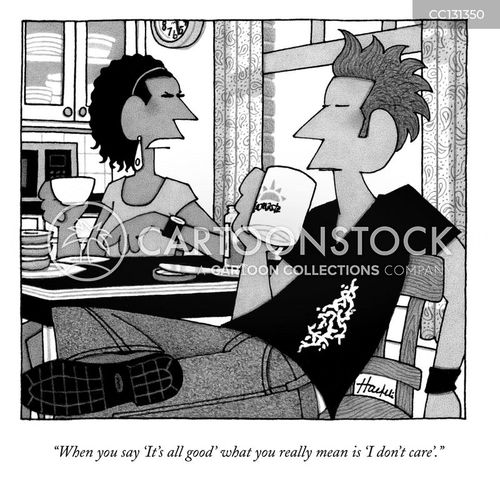
This cartoon depicts how the male in the figure is not particularly interested in what the woman has to say, as seen through the angry facial expression of the woman. In saying that ‘ It’s all good’, he really means that he does not care. He is approaching the topic they are discussing in a blase way and his tone is one of indifference.
Step 2 – Where is the irony or humour?
Irony is the difference between the way things are (reality) and the way things are expected to be. Oftentimes, this reveals the meaning behind the cartoon!
A cartoon is also meant to be funny, often because of the irony of the situation or because it depicts the stark realities of our world.
 | IRONY This cartoon is both ironic and humorous as this situation normally works the other way around, with the owner of pet typically asking their pet to be playful with a friend who has visited. |
 | HUMOUR This cartoon is humorous (+ cynical) as it makes fun of our common desire to go on a holiday to ‘discover ourselves’, only to realise we are still the same. |


Step 3 – What is the main message?
To identify the main message, dissect each element drawn in the cartoon. Ask yourself questions relating to:
- Why is the size drawn for one element bigger than another?
- Why are they saying the things they are?
- What do their facial expression or body language reveal? Is this at odds with what they say?
- What is being drawn in the background vs foreground?
The cartoonist is drawing with a purpose so you need to decipher the main message before going through MCQs. When going through answers to MCQs, leave no pebbles unturned and deduce exactly why each option might be correct or wrong. Find evidence within the text and ask yourself WHAT the cartoonist might have drawn differently for an answer option to be more correct.
Example:


Tone: Anger
Techniques used:
- Symbolism of British flag on ship in the background, highlights the arrival of the first British fleet in Australia
- Angry facial expression and aggressive pointing towards English settlers/boat people: parallels Australian’s refusal to allow refugees in
- Exclamation used in ‘I’m so sick of these bloody boat people’, reveals the paradox in that the English and refugees are both boat people yet their treatment dramatically differs from one another.
- Angry tone and truncated sentences used in ‘Takes our jobs…take our land…disrespect our laws…’ emphasises the anger experienced by Australians about refugees.
Main message:
- The British are like boat people in that they arrived in Australia as foreigners and forcefully took the land, yet paradoxically refuse entry to refugees who were in the same position as the thousands of years ago.
- The irony lies in the fact that those who arrived on Australia shores are all boat people yet Australians have the audacity to reject others/refugees that come after the First Settlers.